

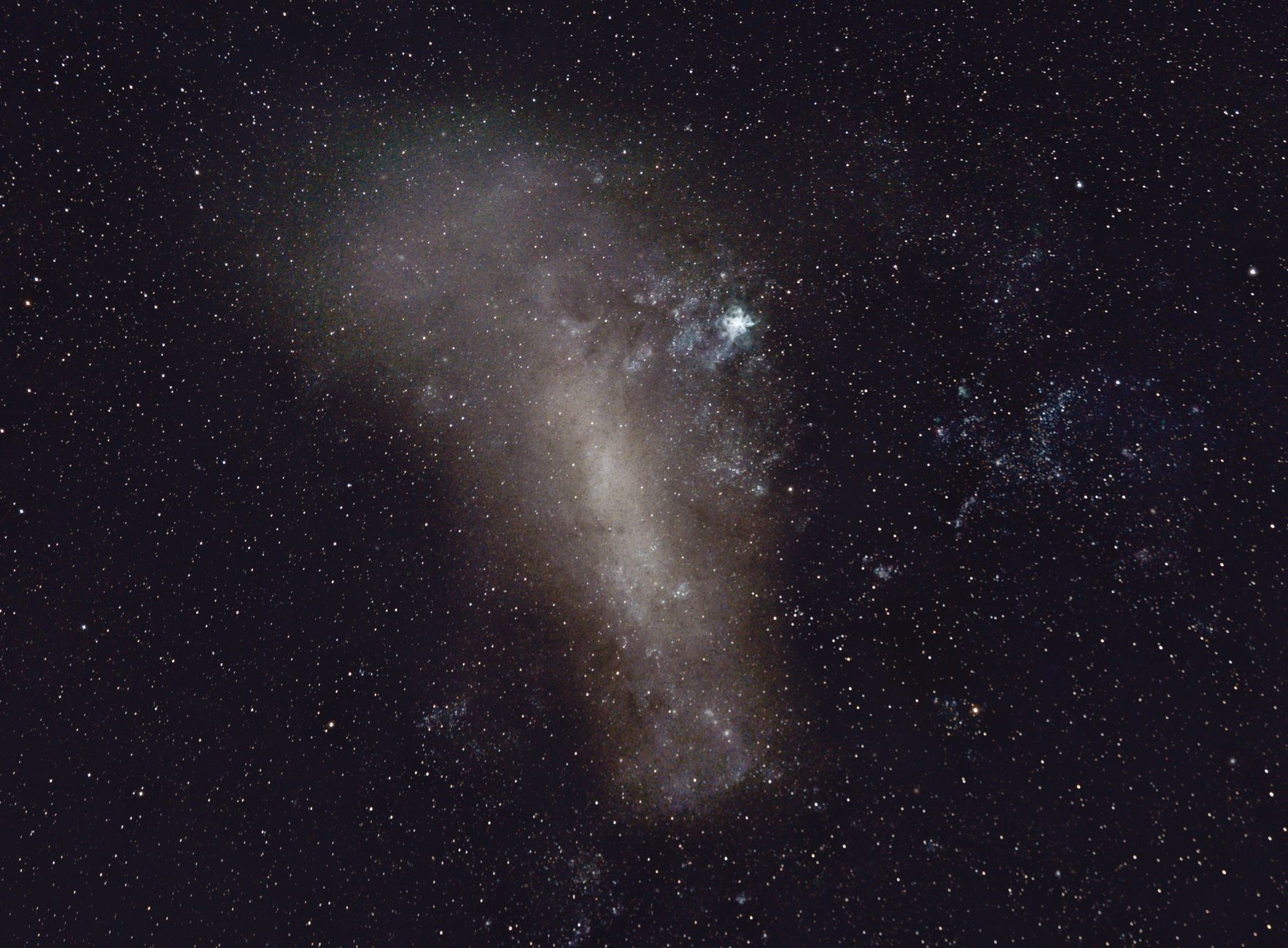
Star engulfing companion events have been directly witnessed by astronomers, shedding light on the dramatic interactions between celestial bodies. This remarkable phenomenon offers new insights into stellar evolution and the life cycles of stars.
What is a Star Engulfing Its Companion?
A star engulfing its companion is a phenomenon that occurs when a more massive star expands, often during its red giant phase, and consumes a nearby smaller star. This dramatic event can provide invaluable insights into stellar evolution and the dynamics of binary star systems.
In recent observations, astronomers have witnessed a star engulfing its companion in real time, marking a significant milestone in astrophysical research. This event allows scientists to study the complex interactions that occur when two stars are in close proximity. The process typically begins when the larger star exhausts its nuclear fuel, causing it to swell significantly.
- Expansion: The outer layers of the star expand, reaching out toward its companion.
- Engulfment: If the companion is close enough, it can be pulled into the larger star’s envelope.
- Energy Release: The engulfment generates tremendous energy, often observable as a bright flare.
This discovery not only enhances our understanding of how stars interact but also sheds light on the fate of binary systems. As a star engulfing its companion occurs, it raises questions about the long-term survival of nearby stars and the eventual fate of the larger star itself.
The Science Behind Stellar Interactions
The phenomenon of a star engulfing its companion is a remarkable event that offers significant insights into stellar evolution. When a star reaches the latter stages of its life cycle, particularly during the red giant phase, it can expand dramatically. This expansion can lead to the engulfment of nearby celestial bodies, including companion stars.
Understanding this process requires a grasp of several key concepts in astrophysics:
- Stellar Evolution: Stars undergo various stages throughout their life cycles, from formation to their ultimate fate as white dwarfs, neutron stars, or black holes.
- Mass Transfer: In binary star systems, a larger star may begin to draw material from its smaller companion, leading to complex interactions that can cause one star to engulf the other.
- Nuclear Fusion: The processes that occur within stars, including hydrogen burning and the subsequent fusion of heavier elements, play a crucial role in their life stages.
Recent observations using advanced telescopes have allowed astronomers to witness a star engulfing its companion firsthand. These observations not only enhance our understanding of stellar dynamics but also shed light on the fate of binary star systems. The discovery of such events underscores the intricate dance of celestial bodies and their profound effects on the universe.
Recent Discoveries in Astronomy
Recent discoveries in astronomy have shed light on the complex interactions between stars and their companions. One of the most fascinating phenomena observed is a star engulfing its companion, a process that illustrates the dramatic and often violent nature of stellar evolution.
In a groundbreaking study, astronomers have successfully captured the moment when a star consumes its companion, providing invaluable data that could reshape our understanding of stellar dynamics. This event not only highlights the gravitational forces at play but also raises questions about the eventual fate of both stars involved.
Researchers utilized advanced telescopes and imaging techniques to monitor the event, allowing them to analyze the characteristics of the engulfed companion. The observations revealed:
- Mass Transfer: The interaction led to significant mass transfer from the companion to the larger star.
- Energy Emissions: Unprecedented energy emissions were detected during the process, indicating intense activity.
- Formation of Accretion Disks: The formation of accretion disks around the primary star was observed, further complicating the dynamics.
These findings not only enhance our understanding of the lifecycle of stars but also have implications for the study of galaxies and cosmic evolution, making the phenomenon of a star engulfing its companion a pivotal area of research in modern astronomy.
Implications for Stellar Evolution
The recent discovery of a star engulfing its companion has significant implications for our understanding of stellar evolution. When a star expands into a red giant, it can consume nearby objects, leading to complex interactions that shape both the star and its companion. This phenomenon offers vital insights into the lifecycle of stars, particularly in their later stages.
As astronomers continue to observe such interactions, several key implications arise:
- Mass Transfer Dynamics: The process of one star engulfing its companion can lead to mass transfer, altering the mass distribution and evolution of both stars involved.
- Formation of Exotic Objects: This interaction may result in the formation of unique astronomical objects, such as binary systems or even supernova progenitors.
- Understanding Stellar Lifespans: By studying these events, researchers can better predict the lifetimes of stars and the conditions that trigger their evolution.
- Impacts on Galactic Evolution: The consequences of a star engulfing its companion can influence the surrounding environment, affecting star formation rates in nearby regions.
Ultimately, the observation of a star engulfing its companion enriches our knowledge of the universe, providing a clearer picture of stellar life cycles and their broader cosmic significance.
How Astronomers Made the Discovery
Astronomers have made significant strides in understanding the phenomenon of a star engulfing its companion through advanced observational techniques and technological innovations. Using state-of-the-art telescopes, researchers captured the moment when a massive star significantly altered its environment, demonstrating a dramatic interaction with its nearby companion star.
The discovery was facilitated by a combination of high-resolution imaging and spectroscopy, which allowed scientists to monitor the star’s behavior in unprecedented detail. The team focused on a binary star system that had shown unusual brightness variations, prompting further investigation.
Through extensive data analysis, astronomers identified the telltale signs of one star expanding and enveloping its companion. The observations revealed:
- The increase in luminosity as the primary star began to swell.
- Changes in the spectral lines, indicating material being transferred between the stars.
- Thermal emissions that suggested significant energy release during the interaction.
This groundbreaking discovery not only highlights the dynamics of stellar interactions but also reinforces the understanding of how a star engulfing its companion can influence stellar evolution. Such findings contribute to a deeper comprehension of the life cycles of stars and their ultimate fates in the cosmos.
Future Research Directions
As the field of astronomy continues to evolve, researchers are poised to explore new avenues in the study of star engulfing companion phenomena. Future research will be crucial in deepening our understanding of stellar interactions and their implications for the cosmos.
One promising direction is the utilization of advanced observational technologies. Telescopes equipped with high-precision instruments can provide more detailed data on the dynamics of stars as they interact with their companions. This could lead to breakthroughs in understanding the life cycle of stars and the conditions that lead to engulfment events.
- Improved Modeling: Enhanced computational models will allow astronomers to simulate the physical processes involved in star engulfment more accurately.
- Surveying Variability: Conducting extensive surveys of various star systems may reveal more instances of engulfment, shedding light on the prevalence of this phenomenon.
- Cross-Disciplinary Research: Collaborations with other scientific disciplines, such as physics and chemistry, could provide new insights into the mechanisms driving these stellar interactions.
Ultimately, the ongoing investigation into stars engulfing their companions promises to enrich our comprehension of the universe’s intricacies and the diverse fates of celestial bodies.
Understanding Cosmic Phenomena
Understanding cosmic phenomena is crucial for unraveling the complexities of the universe. One of the most captivating events that astronomers study is a star engulfing its companion, an occurrence that sheds light on stellar evolution and the life cycles of stars. When a star expands into a red giant phase, it can reach out and consume nearby celestial bodies, leading to dramatic changes in its own structure and behavior.
These interactions provide valuable insights into the dynamics of star systems. As one star engulfs its companion, it may transfer mass, altering its own composition and energy output. This process can trigger a series of reactions, resulting in phenomena such as novas or even supernovae. Understanding these processes helps astronomers grasp the lifecycle of stars and the intricate dance of gravitational forces at play.
Furthermore, studying these events allows scientists to explore the implications for planetary systems that may be nearby. The fate of any orbiting planets can be significantly affected by the engulfing star’s transformation. As researchers continue to observe and analyze such captivating phenomena, they unlock the mysteries of the universe, paving the way for future discoveries that could redefine our understanding of cosmic interactions.
The recent findings regarding the star engulfing companion have revolutionized our understanding of stellar evolution. Researchers are now able to trace the effects of a star engulfing companion on its host star’s life cycle.
Photo by Dennis Ariel on Pexels